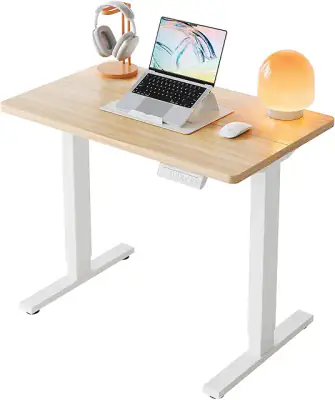
The Reverse Setup: Why Starting with the Chair is a Secret Advantage
Most people approach home office design backward. They buy a desk that fits their room's aesthetic and then try to find a chair that fits under it. If you already own an office chair, you are actually in a superior position to create an ergonomically perfect workspace.
Your chair is the primary interface between your body and your work. By matching a desk to your chair, rather than the other way around, you can ensure that your keyboard height, monitor alignment, and leg clearance are mathematically optimized for your specific body type.
In this guide, we will walk through the critical measurements, styles, and functional requirements to help you choose the best desk for the chair you already love.
---
1. The Critical Measurements: Will It Fit?
Before browsing for styles, you must pull out a measuring tape. There are three dimensions of your Ergonomic Office Chair, Mesh Seat Cushion with 3D Armrests and 3D Headrest, Adjustable Lumbar Support with 90-120° Rocking Function, SGS Class 4 Gas Clylinder, Black that will dictate which desks are viable options.
Armrest Height and Clearance
This is the most common mistake in home office setups. If your chair has armrests, you need to know their maximum height from the floor.
The Goal: Your chair should be able to slide partially or fully under the desk when not in use.
The Math: Measure from the floor to the top of the armrests. Your desk must have a 'clearance height' (the space under the desktop) that is at least 1 inch higher than your armrests.
Seat Height and Leg Room
Measure your chair at its most comfortable sitting height.
The Goal: You need enough 'thigh clearance' so that you aren't hitting the underside of the desk or any drawers.
The Math: Measure from the floor to the top of your thighs while seated. Avoid desks with thick center drawers if you have a high-profile chair or if you are a taller individual.
Base Width
If you are looking at a compact desk or a desk with a built-in pedestal (drawers on the side), measure the widest part of your chair’s wheel base.
The Goal: You need to be able to roll in and out without the wheels hitting the desk legs or the drawer unit.
The Math: Most standard chair bases are 24–28 inches wide. Ensure the 'knee well' of the desk is at least 30 inches wide for comfortable movement.
---
2. Desk Height: Fixed vs. Adjustable
Standard desks usually sit at 29 to 30 inches high. While this is the industry standard, it is actually too high for many people, leading to shoulder strain.
The Case for the Standing Desk
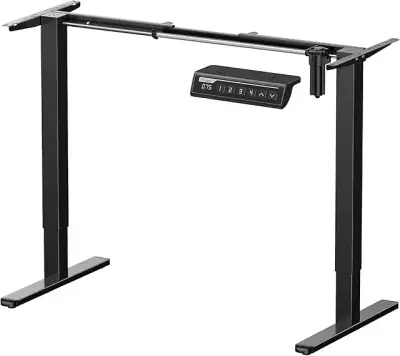
If your chair has a wide range of height adjustments, a ErGear Electric Stand up Desk Frame,4 Memory Height Settings Height Adjustable Table Legs, Sit Stand Desk Frame Up to 47.2" , Ergonomic Standing Desk Base Workstation, Black Frame Only (or height-adjustable desk) is almost always the best choice.
Micro-Adjustments: You can move the desk to the exact millimeter where your elbows rest at a 90-degree angle while your feet are flat on the floor.
Versatility: If you decide to add a Ergonomic Office Chair, Mesh Seat Cushion with 3D Armrests and 3D Headrest, Adjustable Lumbar Support with 90-120° Rocking Function, SGS Class 4 Gas Clylinder, Black or change your chair's height later, the desk can adapt with you.
Fixed Height Desks
If you prefer a traditional wooden desk, look for one that aligns with your chair's mid-range height. If the desk is too high, you may need a footrest to keep your circulation healthy while raising your chair to meet the desk surface.
---
3. Depth and Surface Real Estate
How far your chair sits from the desk depends on the desk's depth.
The 24-Inch Standard: Good for small rooms and laptop users. However, if your chair has long, non-adjustable armrests, a shallow desk might prevent you from getting close enough to the screen.
The 30-Inch Depth: Recommended for those using a monitor arm or large displays. This depth allows you to maintain the 'arm’s length' rule for eye health while providing enough room for your chair's armrests to sit comfortably under or against the edge.
---
4. Matching Styles: Aesthetic Synergy
Your office should feel cohesive. Since you already have the chair, use its design language to pick the desk material.
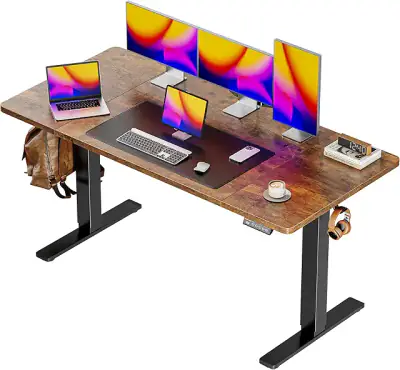
The Mesh Modernist: If you have a high-tech mesh chair (like an Aeron or similar), look for desks with metal legs, glass tops, or clean white laminates. An industrial-style Huuger 55 x 28 Large Electric Standing Desk, Height Adjustable Computer Desk, 27.6" Deep Desktop, Stand up Gaming Office Desk with 2 Hooks, 3 Preset Heights, for Home Office, Rustic Brown with a gray or white finish complements the 'tech' look.
The Executive Leather: If you have a thick, bonded-leather executive chair, look for substantial wood desks. A dark walnut or oak finish provides the visual weight needed to balance a large chair.
The Fabric Task Chair: These are versatile. They pair well with 'Scandi' style desks—light woods, tapered legs, and minimal hardware.
---
5. Ergonomic Checklist for Your New Setup
Once you have narrowed down your desk choices, run through this ergonomic checklist to ensure the combination may support long-term posture health:
- Elbow Angle: When seated in your chair at the desk, your elbows should be at roughly 90 degrees, with your forearms resting flat on the desk or armrests.
- Eye Level: The top third of your monitor should be at eye level. If your new desk is low, you may need a monitor stand.
- Leg Clearance: You should be able to cross your legs under the desk without hitting the top.
- Reach Zone: You should be able to reach your mouse and keyboard without leaning forward out of your chair’s backrest.
---
6. Actionable Takeaways
Measure Twice: Floor-to-armrest and floor-to-thigh measurements are more important than the desk's color.
Prioritize Adjustability: If your budget allows, a height-adjustable frame offers the best long-term compatibility with any chair.
Check the 'Knee Well': Ensure the space between the desk legs is at least 4-6 inches wider than your chair's base.
* Consider the Floor: If you are buying a heavy desk to go with a rolling chair, consider adding a chair mat to protect your flooring and make movement easier.
Conclusion
Choosing a desk for an existing chair is about creating a symbiotic relationship between furniture and physiology. By focusing on clearance, height alignment, and depth, you transform a simple workspace into a productivity powerhouse. Take the measurements today, and you'll avoid the discomfort of a mismatched setup tomorrow.